
TUBE PIPA TITANIUM DAN SPECIAL METALS
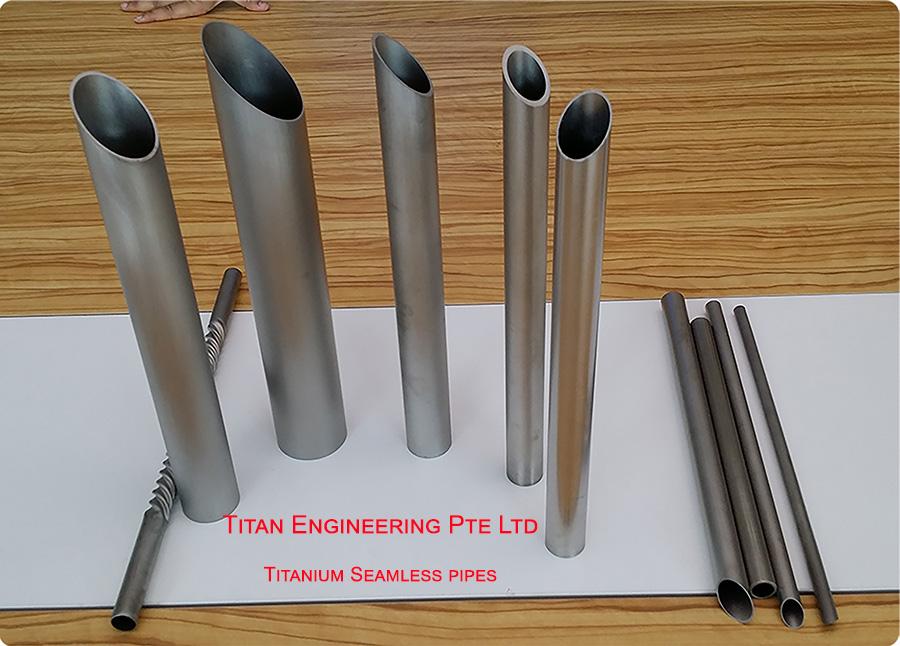
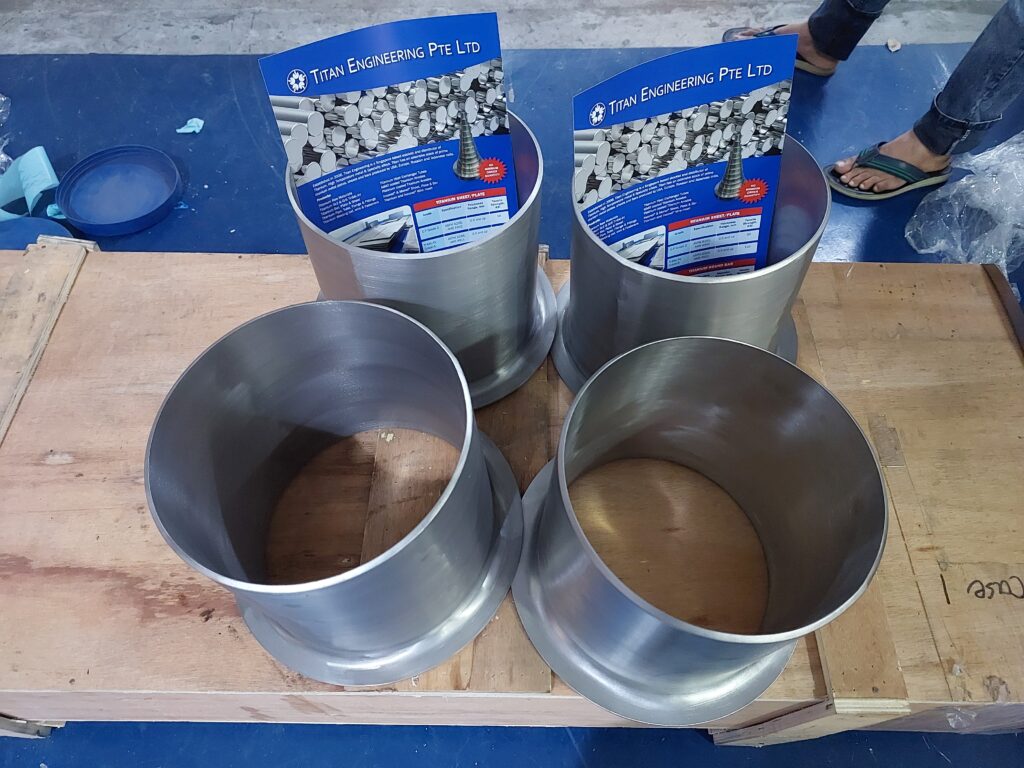
Tube, Pipa dan Fitting Titanium dalam tipe Seamless maupun Welded, diproduksi dengan spesifikasi ASTM / ASME dalam berbagai ukuran. Jenis flange seperti las-laher, slip-on, blind, sambungan, ulir dan soket tersedia dalam spesifikasi ASME B16.5. Kami memasok tabung titanium ke perakit industri Minyak & Gas terkemuka untuk membangun penukar panas, pendingin udara, dan peralatan proses lainnya. Bergantung pada kebutuhan proyek anda, kami dapat menyediakan dengan spesifikasi ASTM / ASME atau NORSOK M630. For detailed information for Titanium Tubing, please contact your Special Metals Indonesia sales representative.
CP Grade-2 Titanium, TP270C, TP340C, TP340H, TB340 Seamless Tubes dan welded tubes are typically used in commercial heat exchangers, and condensers.
Titanium Tube standards: ASTM B 338, ASTM B 337, ASTM B 861.
| Materials |
|---|
| Titanium |
| Inconel |
| Monel |
| Hastelloy |
| SS904L |
| SS316Ti |
| Incoloy |
Annealed Titanium GR 2 Round Tubes memiliki kekuatan tarik 345 Mpa terbuat dari Titanium murni komersial, pipa-pipa ini mudah dibentuk, memungkinkan kelenturan maksimum dan ketangguhan benturan yang tinggi. Pipa dan Tabung Titanium semakin banyak digunakan dalam berbagai aplikasi karena ketidakefisienan baja tahan karat dan bahan lainnya. Praktik terbaru adalah tabung titanium digunakan untuk proyek tabung ulang kondensor. Tabung stainless asli perlu diganti karena rawan korosi. Alih-alih menggunakan tabung stainless, saat ini, tabung titanium
digunakan karena harga titanium telah turun drastis dalam dekade terakhir.
The Titanium Tubes are used in the following applications:–
-
1. Heat Exchangers and Condensers
This is the most common application for titanium tubing, particularly Grade 2 (commercially pure).
Power Generation: In thermal and nuclear power plants, titanium tubes are used in surface condensers that use brackish or seawater for cooling. Unlike copper-nickel or stainless steel, titanium does not pit or erode in high-velocity seawater.
- Chemical Processing: They are used in shell-and-tube heat exchangers to handle highly corrosive fluids like nitric acid, organic acids, and wet chlorine.Desalination: Titanium tubes are the standard for Multi-Stage Flash (MSF) and Multi-Effect Distillation (MED) plants because they can withstand the boiling brine and high temperatures without scaling or corroding.
2. Aerospace and Defense
In aircraft, weight is the primary constraint. Titanium tubes (often Grade 9, which contains 3% Aluminum and 2.5% Vanadium) provide the strength of steel at roughly 50% of the weight.
-
Hydraulic Lines: High-pressure hydraulic systems in commercial and military aircraft use titanium tubing because it can handle pressures exceeding 5,000 psi without the fatigue issues seen in aluminum or the weight penalty of steel.
-
Fuel Systems: Its resistance to vibration and temperature fluctuations makes it ideal for fuel lines and engine components.
3. Oil & Gas (Subsea and Offshore)
As offshore drilling moves into deeper, more corrosive waters, titanium has become a preferred material for subsea components.
-
Subsea Umbilicals: Titanium tubes are used to house control lines and chemical injection lines that run from the surface to the seabed.
-
Downhole Equipment: In “sour” wells containing H2S and CO2 titanium tubing resists stress corrosion cracking (SCC) that would cause standard alloys to fail.
-
Risers: Titanium’s flexibility and low density make it excellent for drilling and production risers, reducing the buoyancy requirements for offshore platforms.
4. Medical Technology
Because titanium is biocompatible (the human body does not reject it) and non-magnetic, it is used extensively in medical hardware.
-
Surgical Instrumentation: Lightweight, durable tubes are used for specialized surgical tools and endoscopic equipment.
-
Pacemaker Housings: Thin-walled titanium tubing is used to encapsulate the electronics of pacemakers and other implantable devices.
-
Stents: In some cardiovascular applications, titanium alloys are drawn into micro-tubing to create frameworks that hold arteries open.
5. Industrial and Consumer Applications
-
Automotive Exhaust: High-performance and racing vehicles use titanium tubing for exhaust systems to reduce “unsprung weight” and improve heat dissipation.
-
Sporting Goods: High-end bicycle frames, tennis rackets, and golf club shafts utilize thin-walled titanium tubes for their “spring” and durability.
-
Marine Hardware: Components for luxury yachts, such as railings and exhaust ports, use titanium to prevent the “tea-staining” (rusting) common with stainless steel in salt air.
Summary of Common Titanium Tubing Grades
| Application Type | Recommended Grade | Key Reason |
| General Industrial | Grade 2 | Balance of strength and weldability. |
| High Corrosion | Grade 7 or 16 | Palladium content resists reducing acids. |
| Aerospace/Hydraulics | Grade 9 | Cold-workable with very high strength. |
| Structural/High Temp | Grade 5 | Maximum strength-to-weight ratio. |
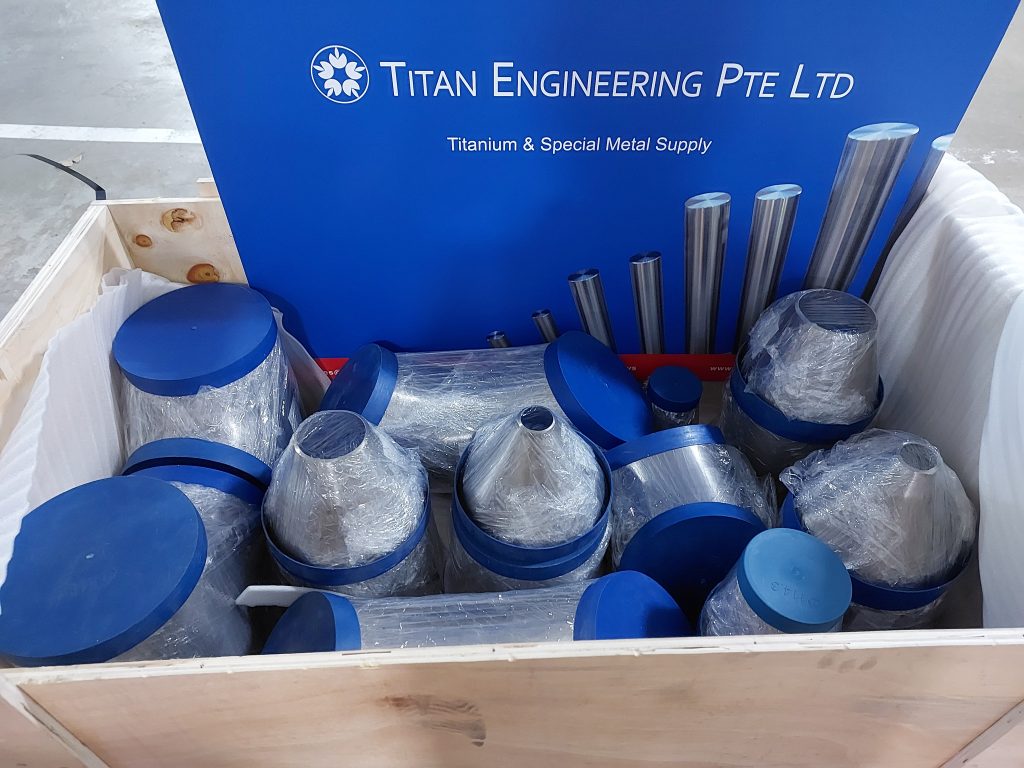
PT.SMI supplies below types of pipe fittings-
- Elbow 45° and 90°
- Equal Tee
- Reducer Tee
- Long Radius Bend
- Short Radius Bend
- End Caps
- Concentric Reducer
- Eccentric Reducer
- Stub Ends
These Fittings are available in different types of end connections.
- Butt Weld
- Socket Weld
- Threaded
- Flanged
- Spigot
- Buttress